
Most student-athletes think networking means awkward small talk, random LinkedIn messages, and asking strangers for favors. That is why they avoid it.
But real networking is not about trying to impress people. It is about building real relationships before you need something. And the student-athletes who do this well are not usually the most outgoing. They are the most consistent.
This guide gives you a simple game plan: start with people already around you, make smaller asks, and use a follow-up system that turns one conversation into real momentum.
- Networking is relationship-building, not contact collecting.
- Student-athletes already have a natural edge in trust, consistency, and follow-through.
- The 10-Person Challenge gives you a simple place to start.
- Small, specific asks get better responses than vague outreach.
- Follow-up is where real relationships are built.
- Events work better when you show up with a plan.
- Consistency matters more than extroversion over time.
Explore the Student-Athlete Resources
Get templates, trackers, guides, and playbooks built to help you take action with more clarity and confidence.
Use the Resources Library to build your networking game plan, organize your next steps, and create momentum beyond one conversation.
What is networking for student-athletes, really?
Networking for student-athletes is the process of building real relationships before you need anything. It is not asking strangers for jobs, collecting business cards, or waiting until you are desperate for an opportunity.
That matters because most athletes have the wrong picture in their heads. They think networking starts at some awkward event with people they do not know. In reality, strong networking starts much closer than that.
It starts with real conversations. It starts with trust, before the pressure shows up.
When you treat networking like a long game, it stops feeling fake and starts feeling strategic.
Why do student-athletes already have a networking advantage?
Networking for student-athletes is the process of building real relationships before you need anything. It is not asking strangers for jobs, collecting business cards, or waiting until you are desperate for an opportunity.
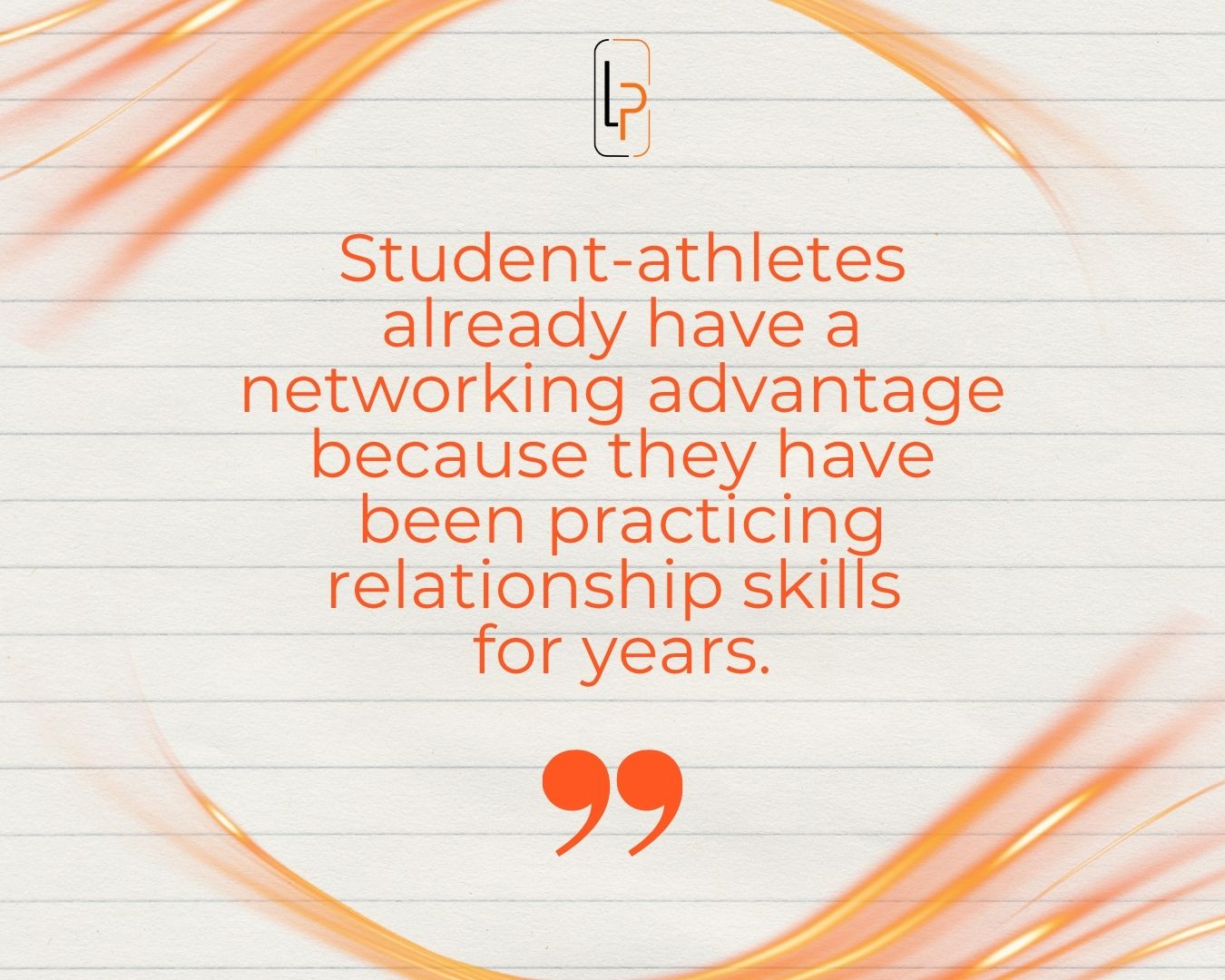
Most people spend years learning how to build credibility. Student-athletes are already doing that inside teams, classrooms, and high-pressure environments.
That is the reframe: you are not starting from zero, you are learning how to apply a skill set you already own. The issue is usually not potential, it is translation.
How does the 10-Person Challenge make networking easier for student-athletes?
The 10-Person Challenge is a simple networking system that helps student-athletes activate the network they already have. Instead of overthinking the perfect strategy, it gives you a clear first move: identify people, choose a field, send a message, follow up fast, and track everything.
That structure matters because vague goals create hesitation. “I need to network more” sounds heavy. “I need to list 10 people and send one message” sounds doable.
The challenge works because it lowers the pressure.
You are not trying to build your whole future in one week. You are trying to create motion.
And motion builds confidence.
Who should be on your first 10-person list?
Your first 10-person list should be built from warm contacts already connected to your world. That usually means teammates, professors, coaches, alumni, family friends, and former employers.
This is where a lot of athletes miss the play. They assume valuable networking has to start with high-status strangers. It does not.
Start with people who already know your character. Start with people one step closer to your world. Start with people who know people.
Warm contacts create easier first reps. And easier first reps make it more likely that you keep going.
What should an athlete actually say in a networking message?
A strong networking message is small, specific, and easy to say yes to. The best asks are short, low-pressure, and built around learning rather than trying to get something big too early.
That is why a 15-minute call works better than a vague “Would love to pick your brain sometime.”
Specific beats vague, clear beats clever.
And respectful curiosity beats forced polish every time.
You do not need to sound corporate. You do not need a perfect script. You need a real reason for reaching out and a simple ask that the other person can answer quickly.
What makes a networking ask feel less fake?
A networking ask feels less fake when the goal is learning rather than extracting value. When you lead with curiosity, keep the ask small, and make the message sound like you, the whole interaction feels more natural.
That is the difference between pressure and momentum. Fake networking usually feels transactional, while real networking feels like a conversation.
You are not trying to force an outcome. You are trying to open a door.
That mindset shift changes the tone of everything.
Why is follow-up where most student-athletes lose momentum?
Follow-up is where real relationships are built, but it is also where most people disappear. The first message creates contact. The follow-up creates trust, memory, and momentum.
This is where good intentions usually die.
A student-athlete has a solid conversation. They mean to follow up. Practice gets busy. Travel happens. Classwork stacks up. Then the moment goes cold.
That is why follow-up has to be a system, not a good intention.
Connect while the conversation is still fresh. Send the thank-you. Circle back when someone helps you. Check in over time without always attaching an ask.
That is how a contact becomes a relationship.
How should student-athletes handle networking events without wasting them?
Student-athletes should treat networking events like high-opportunity moments that need a simple plan. The goal is not to collect the most contacts. The goal is to have a few real conversations, note what matters, and follow up fast.
Most people waste events because they show up without a plan.
They stay near the food, talk to people they already know, and leave with nothing useful to build on. A better play is simple.
Know a few names before you walk in. Aim for three real conversations. Prepare a clean opener. Ask more than you talk. Get the contact info before you leave. Then follow up within 24 hours while the interaction still has energy.
That is how you turn an event into traction.
What weekly habits help student-athletes build a real network over time?
A real network is built through small weekly actions, not random bursts of effort. Consistent habits like reaching out, following up, engaging thoughtfully, and reviewing next steps build more opportunity than one big push ever will.
This is where athlete wiring becomes a strength.
Student-athletes already understand reps. They already understand routine. Networking works the same way.
One new connection a week. One follow-up. One value-add. One tracker review. That may not feel dramatic in the moment.
But over a semester, it compounds. Over a year, it changes your options.
Why is consistency more important than personality in networking?
Consistency matters more than personality because strong networks are built one conversation at a time. You do not need to be the loudest person in the room. You need to be someone who keeps showing up, keeps following through, and keeps building the relationship after the first interaction.
This is good news for student-athletes who think they are “bad” at networking.
You do not need to become a different person. You do not need fake confidence. You do not need to perform.
You need a simple game plan and the discipline to stay with it.
That is how real networks are built. Not in one perfect conversation. In repeated, honest follow-through.
Explore the Student-Athlete Resources
Get templates, trackers, guides, and playbooks built to help you take action with more clarity and confidence.
Use the Resources Library to build your networking game plan, organize your next steps, and create momentum beyond one conversation.
Frequently Asked Questions (FAQ)
How should student-athletes start networking?
Student-athletes should start networking with people they already know and with a small, specific ask. Starting warm makes the process easier, more natural, and more likely to lead to a real conversation.
What is the best first networking message for student-athletes?
The best first networking message is short, respectful, and clear about why you are reaching out. A simple ask for a 15-minute conversation is usually stronger than a vague or oversized request.
How often should student-athletes follow up after a networking conversation?
Student-athletes should follow up quickly and then stay consistent over time. A same-day connection, a thank-you within 24 hours, and occasional value-based check-ins create stronger long-term relationships.