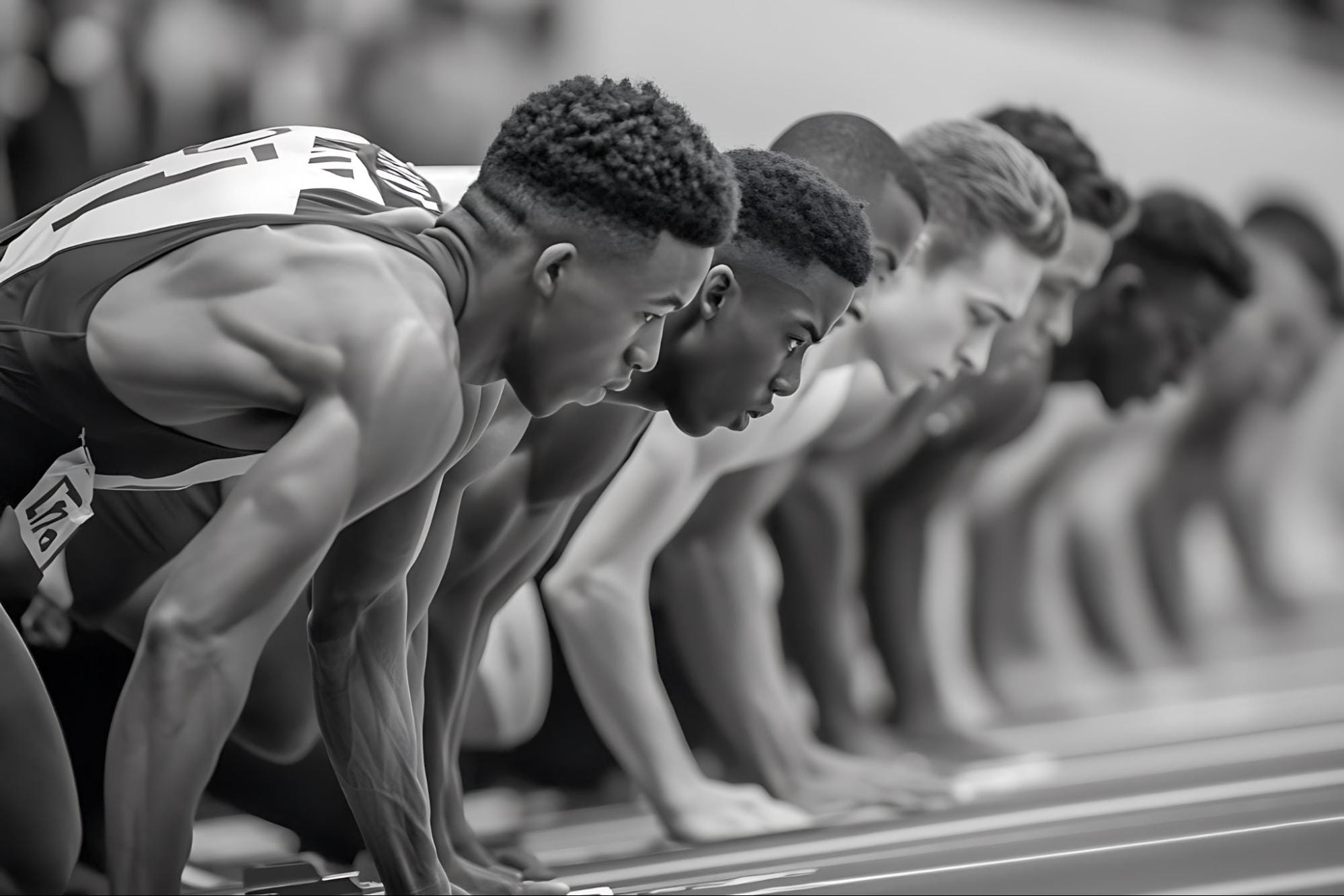
Most student-athletes do not struggle after sports because they lack discipline. They struggle because discipline on the field does not automatically become career readiness off it.
The world after sports rewards a different set of reps. How you listen. How you follow up. How you communicate. How you show up in rooms your sport never prepared you for.
That is why self-starter skills matter.
This guide breaks down what a self-starter actually is, which skills matter most, and how student-athletes can build a simple system before transition pressure shows up.
Explore the Student-Athlete Resources
Get practical guides, scripts, templates, and action plans built to help student-athletes develop career-ready skills before Life After Sports.
Use the Resources Library to audit where you are, build your next reps, and create a clearer game plan for Future You.
- Self-starter skills are learnable behaviors, not personality traits.
- Career readiness for student-athletes starts before life after sports arrives.
- The core self-starter stack includes listening, asking better questions, brand presence, professionalism, networking, follow-up, and storytelling.
- Most athletes do not need more motivation. They need a clearer system and better reps.
- Networking works better when it starts with warm connections and small asks.
- Follow-up is where most opportunities are either strengthened or lost.
- A 90-day action plan turns scattered effort into real momentum.
What does it mean to be a self-starter as a student-athlete?
A self-starter is a student-athlete who takes initiative, asks better questions, follows up without being told, and looks for ways to add value before pressure forces action.
In simple terms, self-starter skills are the off-field behaviors that make you more ready for opportunity.
That matters because talent alone does not carry you through every room. The field rewards performance. The next phase rewards communication, clarity, consistency, and trust.
A lot of student-athletes think being a self-starter is a personality trait. It is not. It is a skill set. That is good news, because skills can be built.
Not by hoping. Not by waiting. By reps.
Why do student-athletes need self-starter skills before life after sports?
Student-athletes need self-starter skills early because transition gets harder when communication, networking, and professional habits are delayed until the end of a sports career.
Career readiness works best when it is built before urgency hits.
This is the trap a lot of athletes fall into. They assume they will figure it out later. Later usually means when the season ends, graduation gets close, or identity starts shifting faster than expected.
That is panic season. And panic is not a great time to build your story, your network, and your confidence all at once.
The pressure is real. NCSA has written about the time demands placed on Division I student-athletes, which is exactly why student-athletes need simple systems instead of complicated plans.
Life After Sports does not start when the jersey comes off. It starts the moment you begin building the habits that give Future You more options. That is the real play.
Which self-starter skills matter most for student-athletes?
The most important self-starter skills for student-athletes are active listening, asking the right questions, building a professional brand, networking, following up, storytelling, and workplace professionalism.
These are the core skills that help athletes become more coachable, more memorable, and more prepared.
Each one does a different job: active listening helps you stand out in conversations, while better questions help you show curiosity and preparation.
A stronger personal brand helps people understand who you are before you walk into the room, networking helps you build relationships that open doors, and follow-up helps you stay remembered.
Storytelling helps you explain your value in a way people actually care about, while professionalism helps people trust you.
None of these is flashy, but all of them compound.
What does active listening actually look like in real life?
Active listening is the practice of being fully present, tracking what the other person is saying, and responding in a way that proves you understood them. In real life, it looks less like talking well and more like paying attention well.
Most people are not listening, they are waiting to talk, and that is why active listening stands out so fast.
For student-athletes, this matters in networking conversations, interviews, internships, meetings, mentor relationships, and NIL conversations. The athlete who stays present, asks a smart follow-up, and reflects back what they heard immediately feels different.
That kind of presence also helps student-athletes manage the balance between athletics and academics. EducationQuest’s conversation on navigating college athletics from a D1 athlete’s perspective reinforces how much awareness, time management, and communication matter in the student-athlete experience.
This is what active listening looks like in practice:
- Make natural eye contact
- Put your phone away
- Do not interrupt
- Acknowledge what the other person is saying
- Paraphrase key points back
- Ask before jumping into advice
- Notice tone and body language, not just words
This is not complicated. But it is rare, and rare skills create separation.
How do student-athletes ask better questions and build a stronger personal brand?
Better questions and a stronger brand help athletes become more intentional in how they show up and how they are remembered. Good questions show preparation and curiosity. A strong brand makes your story clearer before the conversation even starts.
Most people ask weak questions because they are underprepared. Or nervous. Or both.
A better question does three things. It shows you did some homework. It keeps the conversation moving. It helps you learn something useful.
That is the goal: not sounding impressive, getting clarity.
The same goes for personal brand.
Your brand is not just a logo or a profile. It is the pattern people remember when they come across your name, your message, and your presence online. Whether you are building it or not, it is being formed already.
That is why student-athletes need to own the narrative. RallyFuel’s guide to building a long-term personal brand as a college athlete fits this exact point: your athletic identity, values, and future direction should work together, not compete with each other.
A strong professional brand usually starts with the basics:
- A clear LinkedIn headline
- A simple About section
- Relevant experience and skills
- A clean profile presence
- A consistent picture of where you are headed
You already have a brand. The real question is whether you are building it on purpose.
How should student-athletes network without making it feel awkward or forced?
Student-athlete networking should start with real relationships, small asks, and consistent follow-through. Networking is not about collecting contacts. It is about building genuine relationships with people who can open doors over time.
This is where a lot of student-athletes get stuck. They think networking means random LinkedIn messages, fake energy, or asking strangers for jobs.
That is not the game. Good networking is simpler than that.
Start with people already connected to your world. Teammates. Professors. Alumni. Coaches. Family connections. People who already know your work ethic, your character, or someone who does.
Then keep the ask small.
Not “Can you get me a job?”
More like: “Would you be open to a 15-minute conversation so I can learn more about your path?”
That works better because it feels real. It is easier to say yes to. And it gives you room to build trust instead of forcing outcomes too early.
Networking is not a transaction. It is a long game: start early, start close, and build outward.
Why is follow-up where most student-athletes lose momentum?
Follow-up is the move that turns a good conversation into an actual relationship. Most student-athletes do enough to start the interaction, but not enough to stay remembered after it.
This is where momentum quietly dies.
A great conversation happens. The athlete feels good about it. Then life gets full. Practice. Travel. Class. Fatigue. The follow-up gets delayed. Then forgotten.
And the connection goes cold.
That is why follow-up matters so much. Not because it is formal. Because it signals maturity, respect, and consistency.
A strong follow-up is usually simple:
- Send it within 24 to 48 hours
- Reference something specific from the conversation
- Keep it short
- Make the next step clear
- Connect while the interaction is still fresh
That is it. You do not need a perfect message. You need a repeatable habit.
This is one of the biggest systems-over-willpower moments in career development. If you rely on memory, you will miss people. If you track your next move, you stay in the game.
How do student-athletes tell their story in a way people remember?
Athlete storytelling is the skill of explaining who you are, what you have built, why you are headed in a certain direction, and what you are looking for next. A strong story is not a resume summary. It is the reason someone should care about your resume.
That distinction matters.
A lot of athletes undersell themselves because they think their sport speaks for itself. It does not. Your experience has value, but you still need language for it.
A clear story usually answers four things:
- Who you are
- What skills did athletics help you build
- Why does a specific path interest you
- What you are looking for right now
That is what makes introductions stronger. It is what makes networking conversations smoother.
It is what makes interview answers more memorable.
Your story does not need to be dramatic. It needs to be clear.
Because when your story is unclear, people have to do the work to understand you.
When your story is clear, they can see where you fit.
How can student-athletes turn these skills into a repeatable 90-day system?
A 90-day self-starter system is a simple execution plan that turns career readiness from a vague goal into measurable weekly reps. The point is not perfection. The point is consistent movement.
This is where a lot of smart athletes stall out. They read good advice. They agree with it. Then nothing changes because there is no structure.
The fix is simple: stop treating growth like a feeling and start treating it like a plan.
A strong 90-day system usually includes:
- One goal for LinkedIn or brand presence
- One networking target
- One storytelling practice habit
- One follow-up standard
- One professionalism focus
- One area of career exploration
Then you make the reps weekly.
- Connect with a few people.
- Send one intentional message.
- Practice your story out loud.
- Engage professionally online.
- Review what is working.
- Recalibrate.
That is how confidence gets built.
Not through one big push.
Through repeatable wins.
That is the LP Wealth Group way to look at it. Not restriction, but game plan. Not random effort, but structured reps. Not waiting for transition, but preparing for it.
Explore the Student-Athlete Resources
Get practical guides, scripts, templates, and action plans built to help student-athletes develop career-ready skills before Life After Sports.
Use the Resources Library to audit where you are, build your next reps, and create a clearer game plan for Future You.
Frequently Asked Questions (FAQ)
What is a self-starter for a student-athlete?
A self-starter for a student-athlete is someone who takes initiative, communicates well, follows up, and builds career-ready habits before they are forced to. It is not about personality. It is about trained behavior.
Which self-starter skill should an athlete build first?
The best first skill is usually the one creating the biggest gap right now. For many athletes, active listening, follow-up, or telling their story clearly is the fastest place to start.
Do student-athletes need LinkedIn before they start networking?
No. Student-athletes can start with people already connected to their world and strengthen LinkedIn alongside that process. Start where trust already exists, then build outward.
How often should student-athletes follow up after meeting someone?
Student-athletes should usually follow up within 24 to 48 hours while the conversation is still fresh. One clear follow-up beats waiting too long and losing momentum.