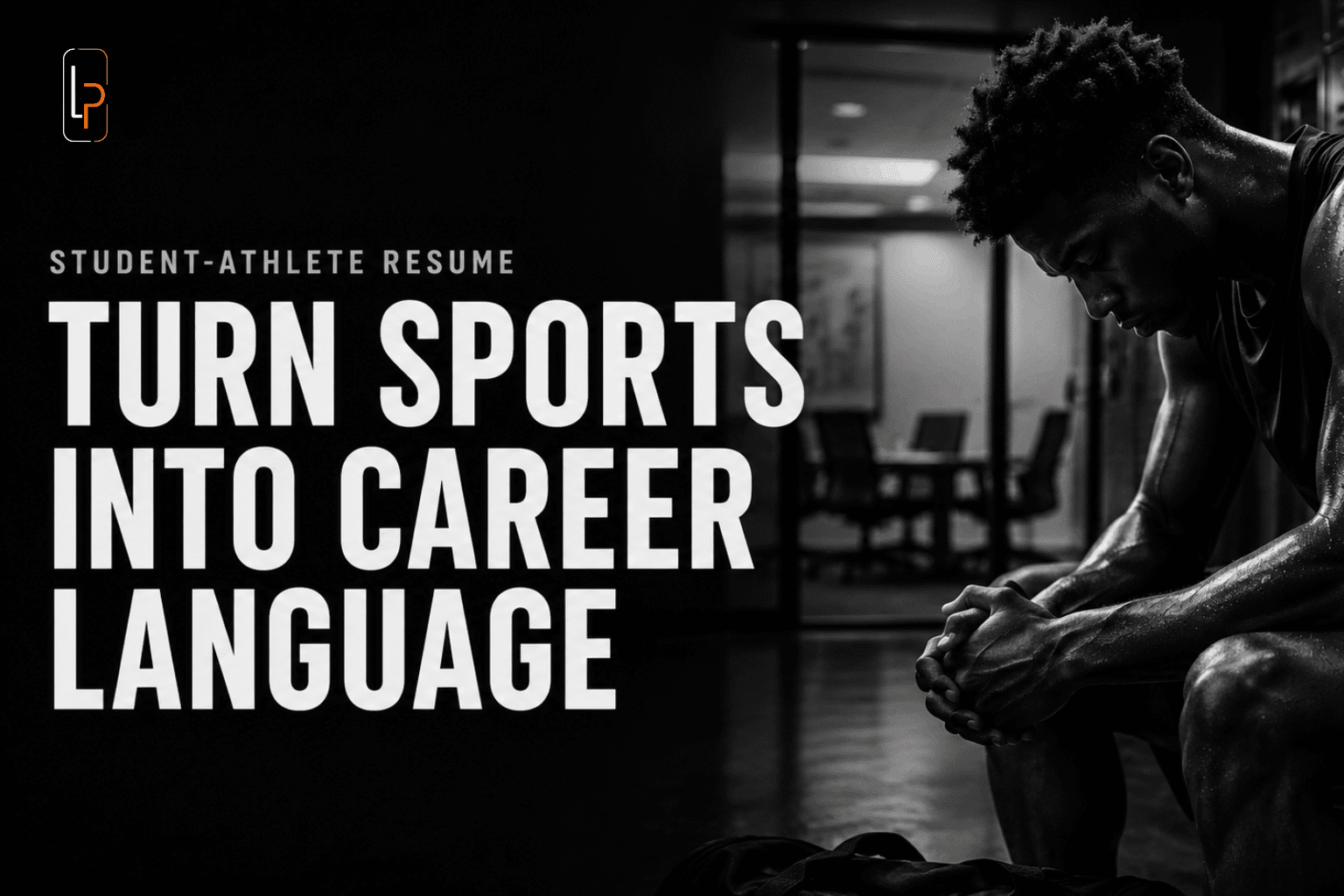
Most student-athletes do not lack experience.
They lack the language to make that experience land in a professional room.
You already know pressure. You already know accountability. You already know what it feels like to manage a packed schedule, recover from failure, handle team conflict, and keep showing up when nobody feels fresh.
But if you cannot translate that into career language, the interviewer may miss it.
This is the play: stop treating your athletic experience like background information. Start using it as evidence.
- Athletic experience becomes career value when you translate it clearly.
- “Tell me about yourself” is not a resume recap.
- Your opener should connect who you are, what you have done, what sports built in you, and where you are going.
- Strong interview answers need evidence, not generic labels.
- The STAR method turns locker room stories into professional answers.
- Sports stories are valid interview stories when you explain the professional skill behind them.
- Practice needs to happen out loud, not just in your head.
Download the Interview Questions Guide
Get the prep checklist, opener formula, STAR structure, and athlete-specific prompts from LP Wealth Group’s downloadable guide.
Use it to build your opener, prepare 3–5 STAR stories, and walk into your next interview with clearer, more confident career language
What does “locker room to career language” mean?
Locker room to career language means explaining what sports built in you in a way an interviewer can understand.
That means you do not just say, “I’m competitive.” You say what competition taught you.
You talk about pressure. Preparation. Accountability. Communication. Adaptability. Time management. Leadership when things were not going according to plan. That is the shift.
Most athletes have the material. They just have not organized it yet. The interview is not where you build your case. It is where you present it.
Your athletic career has already given you the reps. Now you need the language.
Why do student-athletes undersell their experience in interviews?
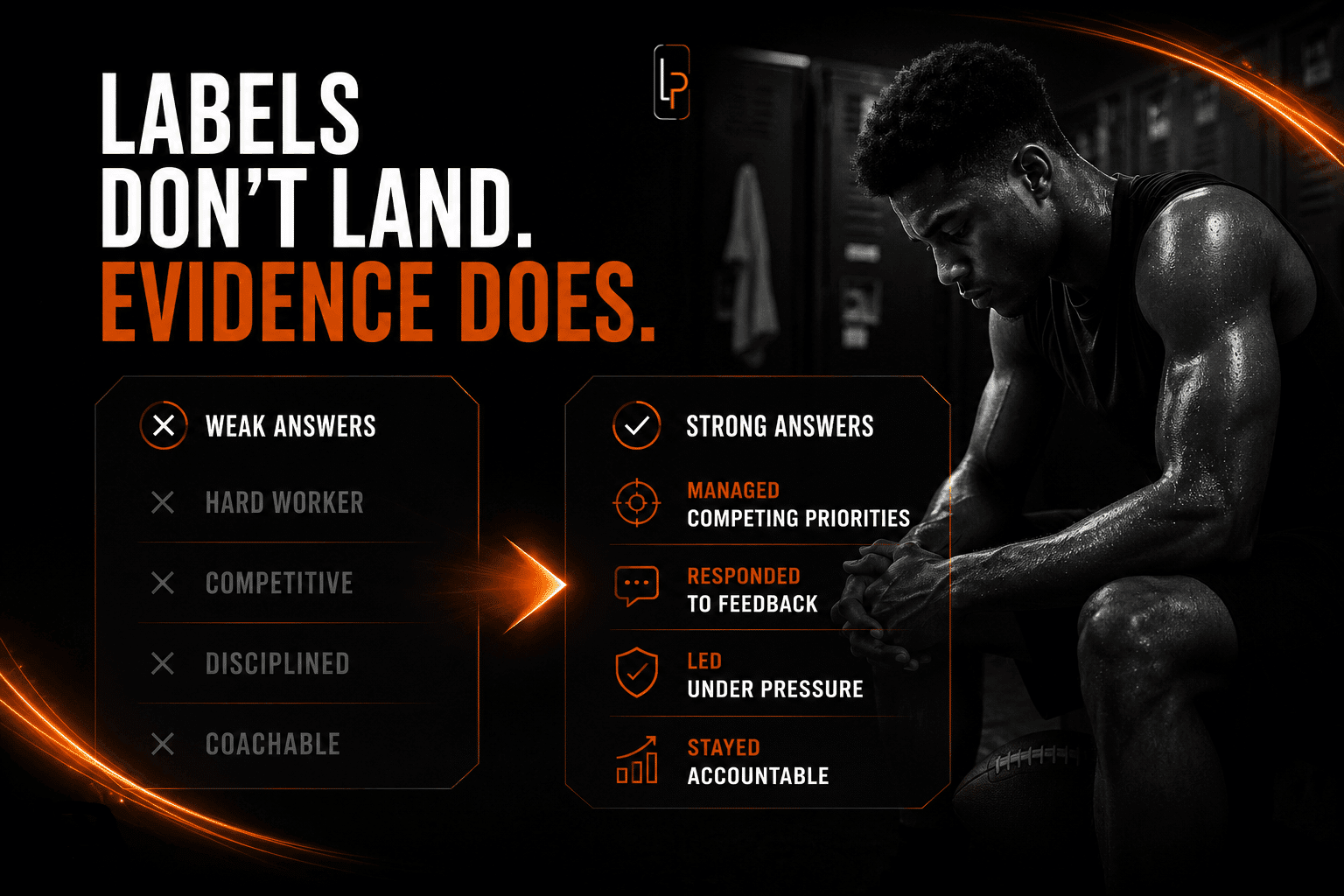
Student-athletes undersell their experience when they use labels instead of evidence. A label sounds like this: “I’m a hard worker.”
Evidence sounds like this: “I managed classes, practice, travel, recovery, and team responsibilities during the season, and I learned how to prioritize when everything felt urgent.”
See the difference? One is an adjective. The other is proof.
Same thing with leadership. Do not just say, “I’m a leader.” Say, “I helped younger teammates prepare, stay accountable, and maintain team standards during the season.” That gives the interviewer something real to evaluate.
Interviewers do not just want to hear that you are disciplined, resilient, or coachable. They want to understand where that showed up and how it shaped the way you work.
That is why generic answers fall flat. You are not trying to hype yourself up. You are trying to make the connection obvious.
How should athletes answer “Tell me about yourself”?
“Tell me about yourself” is a short positioning answer that explains who you are now, what experience qualifies you, what athletic skills transfer, and why the opportunity fits.
It is not your life story; it is the opening possession. The cleanest structure is simple: Present. Past. Skills. Future.
Start with who you are right now, your sport, school, major, or current focus, then give the relevant background: internships, work experience, leadership roles, team responsibilities, or projects.
After that, translate what athletics built in you: pressure management, schedule discipline, accountability, communication, or teamwork, then close with why this role or opportunity makes sense.
That last part matters because a strong opener does not just explain where you have been. It shows you know where you are trying to go.
What athletic skills should become career language?
Athletic skills become career language when they are connected to workplace competencies.
That means you take what happened in sports and explain what it proves professionally.
- Pressure becomes composure.
- Teamwork becomes collaboration.
- Film study becomes preparation.
- Practice habits become consistency.
- Coaching feedback becomes adaptability.
- Leadership becomes influence.
- Balancing school, travel, practice, and recovery becomes time management.
This is where athletes have an advantage, but only if they translate it.
A hiring team may not understand your sport. They may not know what your schedule looked like, or what it takes to stay ready through a long season. So do not make them guess, say it clearly instead.
Being a student-athlete taught you how to operate under pressure, manage competing priorities, and stay accountable to people who depend on you. That is career language.
How does the STAR method turn sports stories into professional answers?
The STAR method is an interview structure that organizes a story into Situation, Task, Action, and Result.
For athletes, STAR turns a sports memory into a professional answer with structure, ownership, and outcome.
Here is the breakdown:
- Situation: What was happening?
- Task: What were you responsible for?
- Action: What did you do?
- Result: What happened, and what did you learn?
Simple. Clean. Repeatable.
For example: “During the season, I noticed younger teammates were struggling to stay consistent with preparation. As an upperclassman, I helped organize warmups, checked in before practices, and reinforced the standards coaches expected. Over time, the group became more prepared and accountable.”
That is not just a sports story. That is leadership, communication, and ownership under pressure.
The biggest mistake athletes make is staying too general.
They say, “We had to overcome adversity.”
That may be true, but it does not show much.
- What was the adversity?
- What was your role?
- What action did you take?
- What changed because of it?
That is where the answer starts to land.
And one more thing: use “I” when you are describing your role.
Not because the team did not matter. The team always matters.
But the interviewer needs to know what you specifically did.
Which locker room stories are valid in a professional interview?
Locker room stories are valid interview material when they show real stakes, specific action, and a professional lesson.
A sports story can work just as well as an office story when the stakes, action, and lesson are clear.
- Team conflict? That can show communication.
- A teammate struggling? That can show leadership.
- A bad performance? That can show accountability.
- A sudden role change? That can show adaptability.
- A brutal travel week with school deadlines? That can show time management.
- A moment where you acted before being asked? That can show initiative.
Do not downplay those stories.
The boardroom is not the only place where leadership happens.
The locker room has pressure. Personalities. Friction. Standards. Expectations. Consequences.
That is real experience. Name the skill. Show the moment. Explain the lesson.
How should athletes talk about weaknesses, failure, and gaps?
Athletes should talk about weaknesses, failure, and gaps with honesty, ownership, and a clear next step.
That means you do not hide from the question.
You also do not turn it into a fake strength.
Do not say, “I work too hard.”
That does not build trust.
A stronger answer names a real area of growth, shows what you did about it, and ends with the result or current status.
That is the formula:
- Name the weakness.
- Show the adjustment.
- Explain the progress.
Same thing with failure.
The question is not really, “Have you ever failed?”
Everybody has.
The real question is, “What do you do when things go wrong?”
Athletes should be ready for that.
A missed opportunity, a bad semester, a performance slump, a role change, or a moment where you waited too long to ask for help can all become strong answers if you show accountability and growth.
Failure is not the issue.
Lack of reflection is the issue.
How should athletes handle pressure questions they did not expect?
Pressure questions are interview moments designed to test composure, structure, and clear thinking.
They are not always about having the perfect answer.
They are about how you respond when the room gets uncomfortable.
That could be a salary question.
A gap in your experience.
A question about other offers.
A curveball that feels random.
A prompt like, “Convince me to hire you in 60 seconds.”
Here is the play: pause, breathe, structure your answer, then respond.
Silence is not the enemy.
Filling the silence with noise is.
If you need a second, take it.
That alone shows maturity. You do not have to panic just because the question changed speed.
Composure under pressure is part of the answer.
How should athletes finish the interview strong?
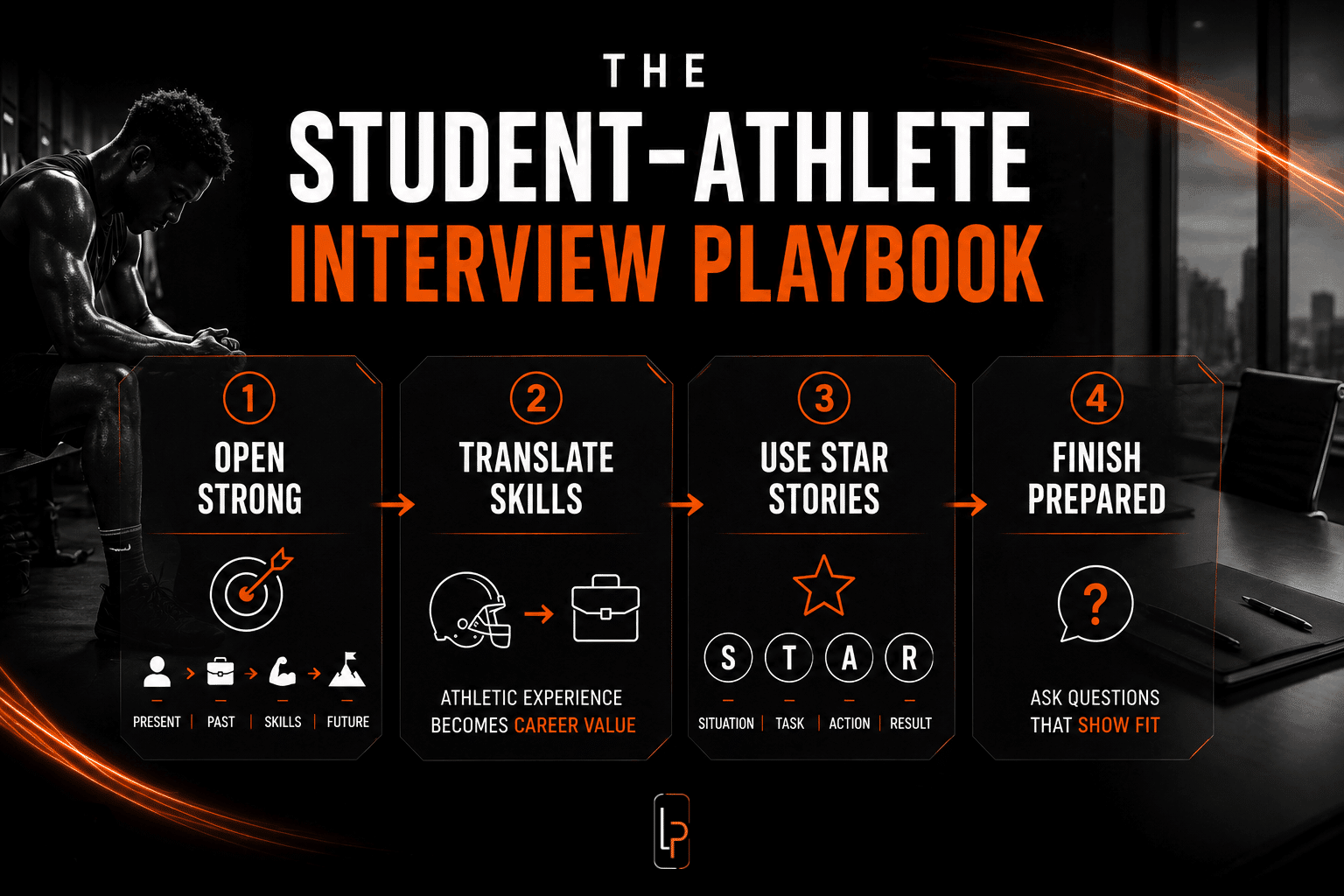
Finishing strong means asking prepared questions that show interest, preparation, and confidence.
The last question is not a throwaway.
When they ask, “Do you have any questions for us?” the answer should be yes.
Not because you are trying to impress them.
Because fit goes both ways.
- Ask about what success looks like in the role.
- Ask what the first 30 days would look like.
- Ask what strong people on the team have in common.
- Ask about culture, growth, expectations, or next steps.
Those questions show that you are thinking like someone who wants to contribute, not just someone who wants an offer.
Avoid questions that make it seem like you did not prepare. There is a time for logistics. The end of the first interview is usually not the time to make that your whole focus.
Your final impression should say one thing: I came prepared.
Download the Interview Questions Guide
Use the guide to build your opener, prepare 3–5 STAR stories, and walk into your next interview with clearer, more confident career language.
You have the experience. This helps you communicate it under pressure.
Frequently Asked Questions
What is career language for student-athletes?
Career language for student-athletes is the professional wording used to explain athletic skills as workplace value.
It turns sports experience into evidence of communication, accountability, leadership, time management, adaptability, and fit.
How should a student-athlete answer “Tell me about yourself”?
A student-athlete should answer “Tell me about yourself” with a short structure: present, past, skills, and future.
The goal is to frame who you are, what qualifies you, what athletics built in you, and why the opportunity fits.
What is the STAR method for athletes?
The STAR method is a framework for organizing interview answers into Situation, Task, Action, and Result.
It helps athletes turn real sports moments into clear professional stories that show what happened, what they did, and what came from it.
Can athletes use sports stories in job interviews?
Yes, athletes can use sports stories in job interviews when they translate the story professionally.
The key is to connect the sports moment to a workplace skill like leadership, communication, adaptability, pressure management, or time management.
How many stories should student-athletes prepare before an interview?
Student-athletes should prepare a small set of flexible stories before an interview.
A few strong stories around leadership, failure, conflict, initiative, pressure, teamwork, adaptability, and time management can cover a wide range of questions.